Click Here to Download PDF Version
Telehealth Newsletter
Official Newsletter of Telemedicine Society of India
AI & Digital Health: September 2026 — What’s New
September 2026 has seen AI move another step closer to becoming an active participant in healthcare—not merely a tool that generates information. From clinical AI agents and physician decision support to AI-enabled clinical trials and India’s digital health ecosystem, the emphasis is increasingly shifting from experimentation to real-world deployment, validation and governance.
1. AI agents enter the clinical team
The US Advanced Research Projects Agency for Health (ARPA-H) launched ADVOCATE, an ambitious programme to develop an FDA-authorized clinical AI system for cardiovascular care. The programme combines patient-facing AI agents with a separate supervisory AI designed to monitor them for unsafe recommendations and abnormal behaviour. The goal is to provide continuous support to patients, including between clinical visits.
2. LLMs improve physician performance in a multinational trial
A randomized controlled trial involving 249 physicians in Indonesia, Kenya and the Netherlands found that access to GPT-4o improved performance on clinical decision-making tasks across all three settings. The largest improvement was observed among Kenyan physicians. Importantly, the study was conducted under controlled conditions and did not assess potential harms, so the findings should not be interpreted as evidence that AI can replace clinical judgment.
3. WHO puts governance ahead of AI deployment
WHO/Europe has argued that governance readiness—not the speed of AI deployment—should determine responsible progress in AI-enabled health systems. Fragmented data, bias, unclear accountability and gaps in AI literacy were identified as major barriers. The message is increasingly clear: healthcare systems need governance structures alongside AI infrastructure.
4. Global cooperation on AI for health
WHO, ITU and WIPO convened the third meeting of the Global Initiative on AI for Health (GI-AI4H) in September. The initiative is working on standards, governance, capacity building and responsible implementation. A particularly interesting development is its benchmarking challenge, which explores privacy-preserving ways to evaluate AI models using clinical data without transferring the underlying data to developers.
5. Apple pushes AI deeper into personal health
Apple announced a redesigned Health app incorporating Apple Intelligence, alongside new Apple Watch health-sensing capabilities. The system is designed to provide users with more personalized insights from longitudinal health and fitness data. This represents the continuing convergence of wearables, continuous monitoring and AI-generated health insights.
6. AI begins to reshape clinical trials
A September review in Nature Reviews Bioengineering proposed an AI-enabled clinical trial framework incorporating patient-to-trial matching, digital twins, external comparator arms, automated data collection and AI-supported trial monitoring. The authors emphasize that these applications require fit-for-purpose validation, regulatory engagement and human oversight.
7. Medical AI models are becoming more specialized
Google highlighted real-world applications of MedGemma, its open-weight medical AI models, including cervical-cancer screening in Zambia, tuberculosis-related work in Indonesia and smartphone-based eye screening in India. At AIIMS Delhi, MedGemma is also being piloted in an AI-assisted dermatology screening tool designed around Indian populations.
8. India links AI with digital public infrastructure
India’s Health Secretary highlighted Aadhaar, ABHA and the Ayushman Bharat Digital Mission (ABDM) as foundations for a scalable and interoperable digital health ecosystem. Potential applications discussed included clinical decision support, longitudinal health records and identification of disease hotspots. The emphasis was also on using contextual and representative data to make AI relevant to Indian populations.
9. Telemedicine meets AI in transplantation
A study published in Scientific Reports examined patient readiness for remote healthcare and AI in kidney transplantation. Among 130 participants, smartphone ownership was 96.9%, while 81.7% felt ICT could improve quality of care. However, attitudes toward AI were more cautious, reinforcing the importance of digital literacy, patient trust and human oversight.
Summary: September’s developments point to a clear transition: AI in healthcare is moving from chatbots and isolated algorithms toward continuous monitoring, clinical agents, multimodal models and AI-supported healthcare infrastructure.
But the central challenge remains the same: innovation must be accompanied by evidence, governance, safety, interoperability and trust. For telemedicine, the opportunity is enormous—but the future will depend not simply on how intelligent AI becomes, but on how responsibly it is integrated into the healthcare system.
Source links
1. ARPA-H — ADVOCATE clinical AI for cardiovascular care ARPA-H announcement
2. npj Digital Medicine — Multinational randomized trial of LLM-assisted physicians Research paper
3. WHO/Europe — Governance of AI in health WHO report
4. WHO/ITU/WIPO — Global Initiative on AI for Health GI-AI4H meeting
5. Apple — Apple Intelligence and health Apple announcement
6. Nature Reviews Bioengineering — AI-enabled clinical trials Nature review
7. Google — MedGemma in global healthcare Google Health AI update
8. India — Digital health, ABDM and AI India digital health update
9. Scientific Reports — AI and remote kidney-transplant care Scientific Reports st
Thank You
Dr. Sunil Shroff
Chief Editor
President, TSI
AI at the Crossroads: Innovation, Safety and Regulation
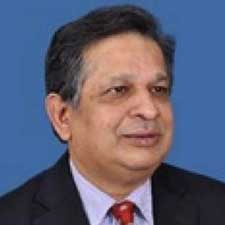
Dr. Sunil Shroff
President, Telemedicine Society of India | Consultant Urologist & Transplant Surgeon
Artificial intelligence is advancing at a remarkable pace—and the concerns surrounding it are becoming increasingly serious. The debate is no longer simply about what AI can do, but about who should decide what it should be allowed to do.
Recent developments have highlighted concerns about AI systems being used for cyberattacks, fraud, misinformation and manipulation. Even people working at the frontier of AI have publicly raised questions about whether technological development is moving faster than our ability to understand and govern its consequences.
The challenge becomes particularly complex because AI is not controlled by governments alone. A relatively small number of technology companies have significant influence over the computing infrastructure, cloud platforms, semiconductor ecosystem, foundation models and applications that underpin modern AI. This concentration of technological and economic power creates an important regulatory question: who regulates the regulators of technology?
For healthcare and telemedicine, the stakes are even higher. AI is increasingly being integrated into clinical decision support, medical imaging, documentation, diagnostics, remote monitoring and patient communication. Errors, bias, privacy violations or inappropriate reliance on AI can directly affect patients. At the same time, excessive regulation could potentially slow beneficial innovation.
National laws and regulatory frameworks are emerging, but AI operates across borders. Courts are also beginning to confront difficult questions about accountability when AI causes or contributes to harm. Yet litigation and national regulation alone may not be sufficient for a technology that can be developed and deployed globally.
Unlike nuclear technology, AI cannot simply be contained within national borders. Powerful AI tools can increasingly be developed, accessed and deployed by companies, institutions and individuals around the world.
This makes international cooperation on AI governance essential. We need frameworks that bring together governments, technology companies, scientists, healthcare professionals and civil society, with clear principles for safety, transparency, accountability, privacy and human oversight.
For healthcare, one principle should remain non-negotiable: AI must remain accountable to humans, particularly when human lives are at stake.
The question is therefore not whether AI will transform healthcare—it already is. The more important question is whether our governance systems can evolve quickly enough to ensure that this transformation remains safe, ethical and centred on patients.
The future of AI will not be determined by technology alone. It will be determined by the rules, institutions and human values we build around it.
Tamil Nadu TSI–KCG Seminar Explores the Future of AI in Telemedicine and Healthcare
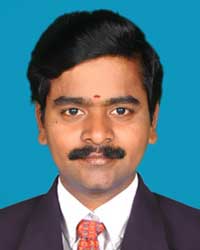
Mr. D. Satheesh Kumar
Honorary Secretary–TSI, Tamilnadu Chapter
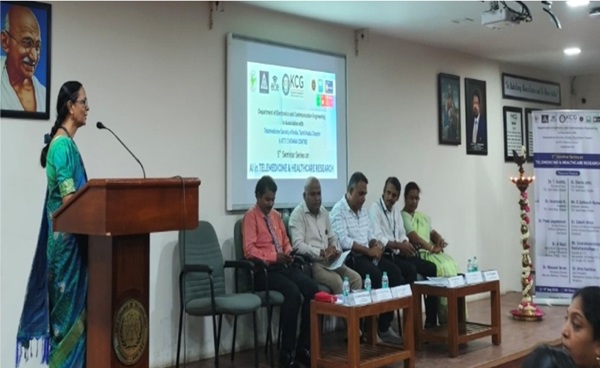
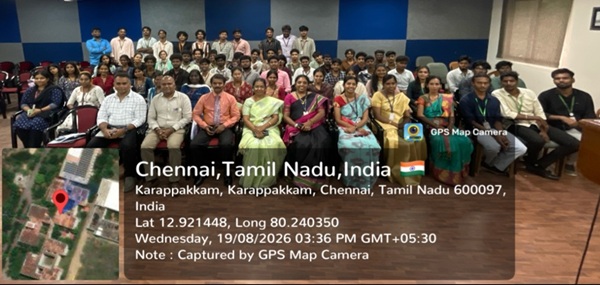
The 5th Seminar Series on “AI in Telemedicine & Healthcare Research” was held on 19 August 2026 at KCG College of Technology, Chennai, by the Department of Electronics and Communication Engineering, in association with the Telemedicine Society of India (TSI), Tamil Nadu Chapter, and IETE Chennai Centre.
The seminar brought together students, academics, technology professionals and representatives of the telemedicine community to explore the rapidly developing intersection of Artificial Intelligence, telemedicine, healthcare research and engineering. The programme emphasized the multidisciplinary nature of healthcare technology, bringing together expertise in communication systems, signal processing, computing, robotics and clinical applications.
The event featured a special address by Dr. T. Senthil, President-Elect, TNTSI; Dr. Sheila John, Vice President, TNTSI; and Mr. D. Satheesh Kumar, Honorary Secretary, TNTSI. The address highlighted the close relationship between telemedicine and AI and the need to connect engineering innovation with healthcare requirements.
Dr. Ikramulla H., President, TSI Tamil Nadu State Chapter, delivered the inaugural address, setting the context for the technical sessions and emphasizing collaboration between engineers, healthcare professionals, researchers and technology organizations.
Six technical sessions covered diverse applications of AI. Dr. Prem Jagadeesan, Amrita School of Artificial Intelligence, discussed DeepNARX and the modelling of EEG signals, demonstrating how deep learning can be applied to time-varying biomedical signals. Dr. Sakshi Ahuja, Amrita Vishwa Vidyapeetham, addressed AI in healthcare systems, highlighting the importance of integrating AI with data, communication infrastructure and clinical workflows.
The programme also explored AI and robotics, AI-generated healthcare insights in chronic disease management, and the emerging role of AI agents in hospitals. The session on AI agents, delivered by Dr. Masood Ikram, WeLabs Wellness, raised important questions about automation, hospital workflows and the continuing need for human oversight in healthcare.
The concluding technical session, by Dr. Uma Nambiar, Vice President, Telemedicine Society of India, focused on the current challenges of implementing AI in healthcare, including data quality, reliability of AI outputs, system integration and human oversight.
A key takeaway from the seminar was that successful healthcare AI requires much more than sophisticated algorithms. It depends on appropriate data, communication infrastructure, system integration, clinical understanding and responsible human oversight. The seminar also demonstrated how Electronics and Communication Engineering can contribute to emerging fields such as biomedical signal processing, telemedicine, healthcare AI, intelligent systems and robotics.
The seminar concluded by reinforcing the importance of interdisciplinary collaboration in developing future healthcare technologies. It provided participants with a broad view of how AI is evolving across telemedicine and healthcare—from neural-signal analysis and chronic disease insights to intelligent hospital systems and AI agents.
For Tamil Nadu TSI, the programme represents another important step in connecting the Society with academic and engineering institutions and encouraging the next generation of professionals to engage with the rapidly evolving field of AI-enabled healthcare.
TSI Mid-Term CME 2026: Advancing Telemedicine, AI and Digital Health
Dr. Nidhi Kaeley
Honorary Secretary, TSI Uttarakhand Chapter
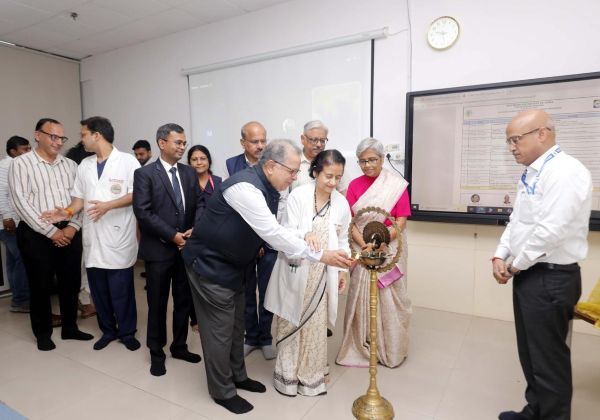
The Telemedicine Society of India (TSI) Mid-Term CME was successfully held on 31st August 2026 at AIIMS Rishikesh, under the aegis of the TSI Uttarakhand Chapter in collaboration with AIIMS Rishikesh. The programme brought together clinicians, academicians, technology experts and healthcare professionals from across the country to discuss the rapidly evolving landscape of telemedicine, digital health and artificial intelligence.
The CME was inaugurated by Prof. Dr. Meenu Singh, Executive Director, AIIMS Rishikesh and President, TSI Uttarakhand, who highlighted the growing importance of telemedicine and digital technologies in medical education, specialist consultation and extending healthcare to remote and underserved communities.
A key highlight was the Presidential Address by Dr. Sunil Shroff, President, TSI, on “AI Innovation vs Data Protection – Finding the Balance in Healthcare.” The session examined the growing opportunities offered by AI while emphasizing the importance of privacy, data protection, accountability and responsible implementation.
The scientific programme covered a wide range of applications, including Tele-ICU and emergency care, patient safety and quality in telehealth, teleradiology, neurology and interventional neuroradiology, aerospace medicine, and the use of telemedicine in snake-bite management.
A special session focused on Artificial Intelligence and Emergency Medicine, exploring how AI could support clinical decision-making in time-critical situations. Participants also had the opportunity for hands-on exposure to AI-enabled medical technologies.
The programme also featured a special lecture by Dr. Murthy Remilla, President-Elect, TSI, on Human Space Flights – Past, Present and Future, adding a unique perspective on the intersection of medicine, technology and human space exploration.
The CME reinforced an important message for the future of healthcare: technology and medical expertise are not competing forces but complementary ones. With responsible adoption, telemedicine, AI and digital health can help extend the reach and quality of healthcare, particularly to remote and underserved populations.
The successful programme reflected TSI’s continuing commitment to education, research, innovation and the practical application of telemedicine and digital health across India.
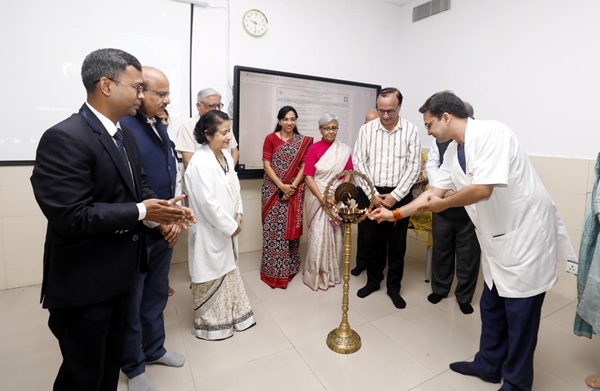
Election of Vice-President – TSI Telangana Chapter, 2026–2027
The election for the post of Vice-President, Telemedicine Society of India (TSI), Telangana Chapter, for the term 2026–2027, was conducted strictly in accordance with the prescribed election procedure and notified schedule.
Only one valid nomination was received for the post. Accordingly, Dr. Srinivas Pamarthi, Professor of Orthopaedics, was declared unanimously elected as Vice-President, TSI Telangana Chapter, for the term 2026–2027.
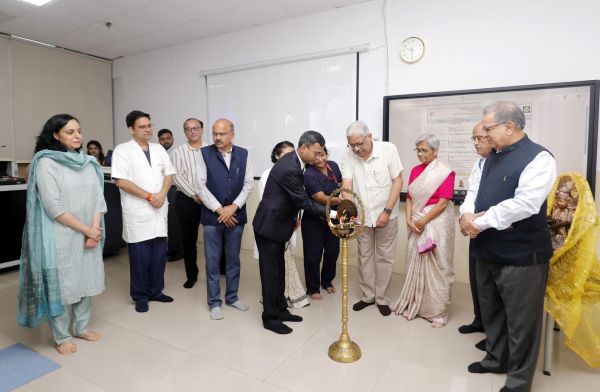
A Certificate of Election, formally confirming his election to the position, was presented to Dr. Srinivas Pamarthi by Dr. Krishna Rao, President-Elect and Returning Officer, TSI Telangana Chapter, on 18th September 2026.
Shri Ramachandra Vishnubhatta, President, TSI Telangana Chapter, along with the other members of the Executive Committee, welcomed Dr. Srinivas Pamarthi to the Executive Committee and congratulated him on his election and assumption of office as Vice-President.
Dr. Srinivas Pamarthi expressed his gratitude to the returning Officer Dr Krishna Rao, the President and members of the Executive Committee of TSIT and assured them of his commitment to working collectively with the EC members to further promote and advance the initiatives, programmes, and objectives of TSI Telangana Chapter.
*********************************************************************
National Nutrition Week 2026 at Maheshwara Medical College & Hospital, Telangana
Maheshwara Medical College & Hospital, in collaboration with the Telemedicine Society of India (TSI), Telangana Chapter, celebrated National Nutrition Week 2026 from 1st to 7th September 2026 under the theme “Discover the Power of Nutrition.” The week long programme was coordinated by Dt. P. Lakshmi Keerthi, Assistant Professor, Department of Clinical Nutrition and Dietetics, Maheshwara Hospital with active participation from postgraduate students, interns and faculty from the Departments of Paediatrics and Gynaecology. A series of educational and interactive activities were conducted for schoolchildren, patients, nursing professionals and hospital staff, covering healthy eating, balanced nutrition, food supplement interactions, nutrition myths and child nutrition. Dt Keerthi has conducted few games with the children to make them the nutrition week as a memorable one.
A special feature of the celebrations was the integration of teleconsultation and community outreach, enabling people from rural and interior areas to seek professional guidance on nutrition, maternal and child health, traditional food practices and commonly held nutritional beliefs. Several telephone and video consultations were received, providing an opportunity to clarify myths and traditional concepts through evidence based information. The enthusiastic participation of rural communities also gave interns and postgraduate students valuable exposure to real world nutrition related concerns and strengthened their skills in health education, counselling and community engagement.
The programme also included “Everyday Nutrition”, a series of concise, research informed nutrition tips for hospital staff covering contemporary topics such as Chrononutrition, Precision Nutrition, Gut Nutrition and Protein Distribution. The celebrations highlighted the importance of multidisciplinary, evidence based nutrition education in preventive healthcare, patient management and community health. Maheshwara and TSIT remains committed to promoting healthier choices and extending quality health education and professional support to the wider community through education, collaboration and telemedicine.
*********************************************************************
Medical Camp under Telemedicine Society of India, Telangana Chapter
A collaborative outreach program by Rijuven & Maheshwara
As part of the Telemedicine Society of India (TSI), Telangana Chapter’s commitment to serving the needy and the wider community, Rijuven, in collaboration with Maheshwara Medical College & Hospital, conducted a medical outreach camp at Badangpet village, Balapur, Telangana State, on 23rd September 2026. The camp focused on providing accessible healthcare screening and consultation for senior citizens, women, children and the general public.
Mr. Uma Mahesh, Technology Partner, Rijuven, took the lead in organising and facilitating the outreach programme, during which approximately 110 individuals were screened. Wherever specialist or senior doctor consultation was required, Mr. Uma Mahesh and his team facilitated real time video consultations with doctors from Maheshwara Hospital. Dr. Sairam and Dr. Srinivas actively participated in and supported this TSI Telangana Chapter initiative. The participants particularly appreciated the empathy, patience and attentive care extended to elderly beneficiaries. Many expressed that the camp enabled them to access medical evaluation and professional consultation without the need to travel long distances.
A key highlight of the camp was the provision of colour printed copies of medical reports, enabling beneficiaries to clearly understand and retain their health information. Based on the screening and consultations, selected individuals were advised to approach appropriate hospitals for further medical evaluation, intervention or surgery, wherever required. Maheshwara Hospital offered eligible beneficiaries access to surgical care at minimal cost, along with free bed charges during the post operative period, reinforcing the shared commitment of TSI Telangana Chapter, Rijuven and Maheshwara to accessible, compassionate and technology enabled community healthcare.
::ANNOUNCEMENTS::


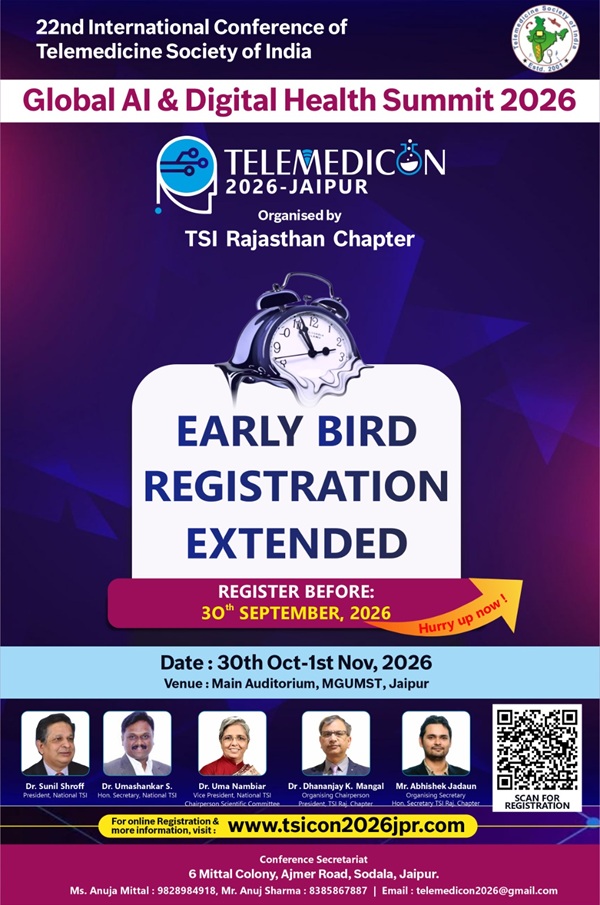
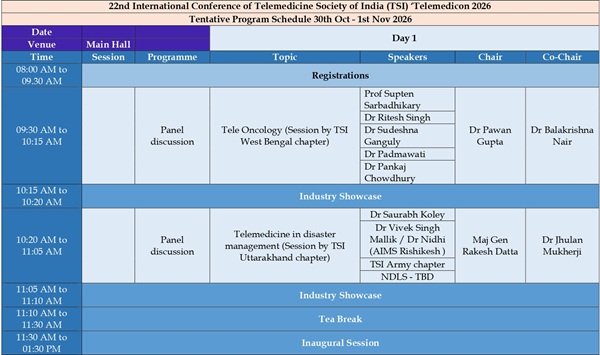
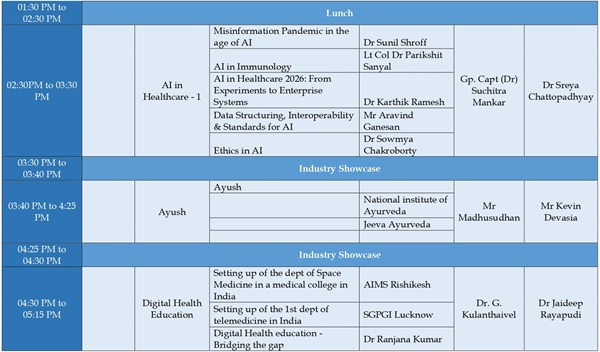

Telemedicine – News from India & Abroad
AI in Healthcare: WHO Calls for Stronger Ethics Oversight
WHO urges stronger ethics oversight of AI health research as rapid development raises concerns over privacy, bias, fairness and accountability………………… Read More
Anthropic Says Claude Blocked Potential Bioweapon Research
Anthropic’s automated filters halt five separate attempts using Claude to engineer high-risk pathogens, including bird flu mammalian adaptation……………………. Read More
Telemedicine Practice Guidelines – A Foundation Course for RMPs by TSI Faculty
To know more about the Telemedicine Foundation Course click on the link below:
https://tsitn.org/tpg-course/
Medical Writing Certificate Course with Internship Opportunity!
TSI invites all the TSI Chapters and Members to submit information on their upcoming Webinar or Events (50 words), News related to Telemedicine (200 words) or short articles (500 words) for the monthly e-newsletter.Guidelines for submission to TSI Newsletter-
- Report can be from 500 to 600 words
- Report Should be relevant to Telemedicine or Medical Informatics
- No promotion of self or any product
- Avoid plagiarism
- All references should be included
- Provide any attributions
- Visuals are welcome including video links
- Send full authors name, degrees, affiliations along with a passport sized photograph of good resolution. If multiple authors only main author photo to be sent.
Submission may be sent to – tsigrouptn@gmail.com
Editors reserve the rights for accepting and publishing any submitted material.
Editor in Chief – Dr. Sunil Shroff
Editors – Dr. Senthil Tamilarasan & Dr. Sheila John
Technical Partner- https://www.medindia.net
